
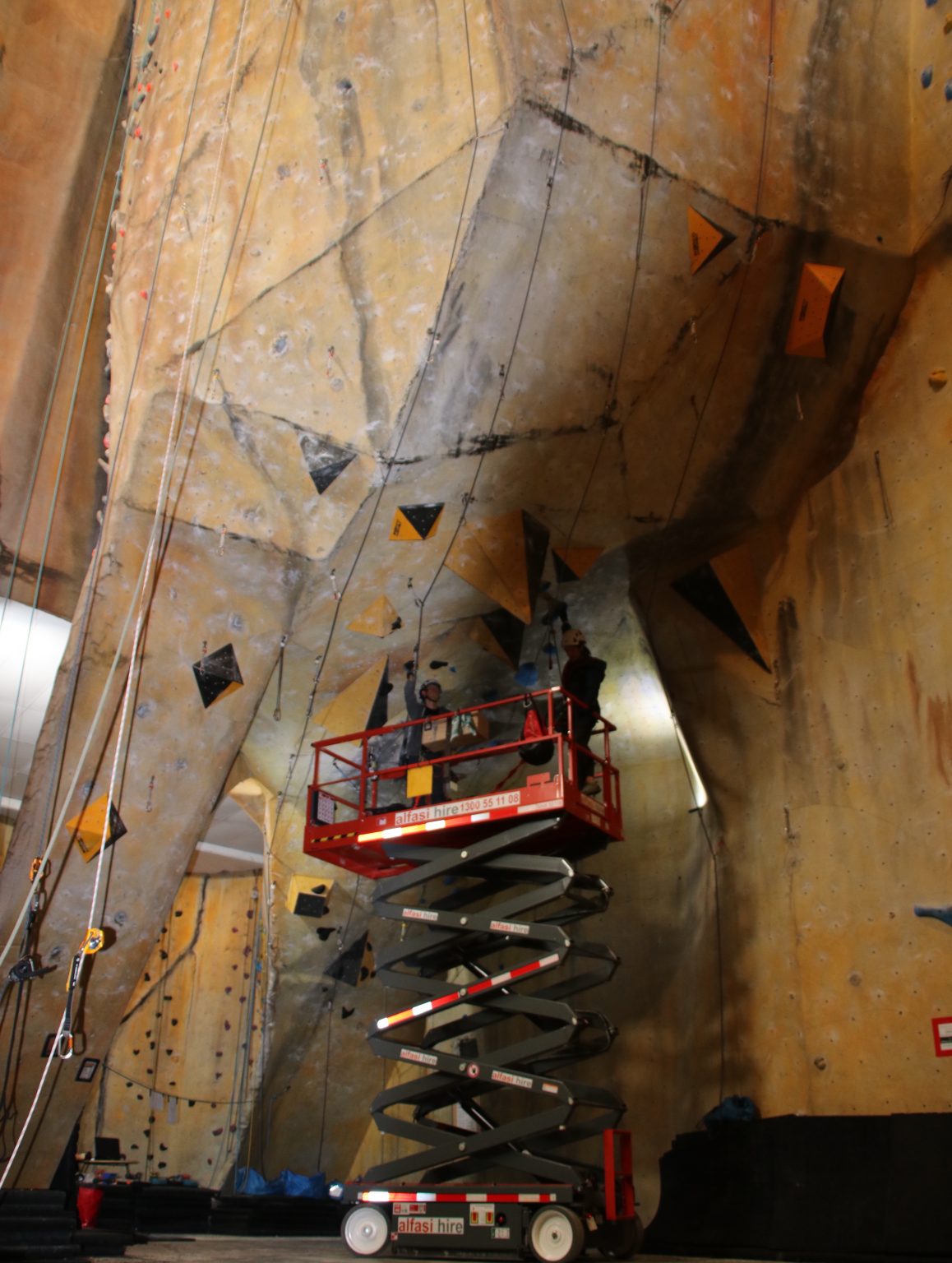
AS 2316 inspection of a roped climbing wall from a scissor lift
Guide ยท Climbing wall safety in Australia

AS 2316 explained: the Australian Standard for climbing walls

What AS 2316 is, which walls it covers, how often climbing and bouldering walls need to be inspected and by whom, and how to choose an inspector. A plain-English guide from an inspector who sits on the committee reviewing the standard.

  • AS 2316.1.1Belayed climbing and abseiling walls
  • AS 2316.1.2Bouldering walls and matting
  • AS 2316.1.3Climbing holds (EN 12572-3)
  • Revised 2021Three parts replaced AS 2316.1:2009
The basics

What is AS 2316?

AS 2316 is the Australian Standard series for artificial climbing structures and challenge courses. It sets minimum safety requirements for climbers, boulderers, belayers and abseilers of all skill levels, and gives designers, manufacturers and facility operators the guidance they need to avoid injuries.

The original AS 2316.1:2009 covered every kind of artificial climbing wall in one document. In 2021 Standards Australia revised it and split it into three parts, so that belayed walls, bouldering walls and the holds themselves each have requirements written for them.

AS 2316.1.1:2021

Belayed climbing and abseiling structures

Roped walls: lead, top-rope and abseil structures, including anchors, protection points and the belay set-up.

AS 2316.1.2:2021

Bouldering structures

Un-roped walls where a fall ends on the mat. This part introduced a test method for impact-attenuating matting, with a minimum fall height and additional tests on mats to be performed annually.

AS 2316.1.3

Climbing holds

An identical adoption of the European Standard EN 12572-3:2017, covering the holds bolted and screwed to the wall.

Who it applies to

Every artificial climbing wall in Australia

AS 2316 is written for fixed and mobile artificial climbing walls wherever they are, not just commercial gyms. Education departments and other bodies reference it in their own activity guidelines, and it is the benchmark an insurer, a council or a court will look to if something goes wrong.

If people climb on a structure you own or operate, the standard applies to you.

  • Commercial climbing and bouldering gyms
  • Schools, universities and outdoor education centres
  • Council and community walls, indoors and outdoors
  • Gymnastics, youth sport and scout facilities
  • Leisure centres and holiday parks
  • Therapy and physiotherapy walls
  • Private and home walls used by others
Inspection requirements

Three levels of inspection

AS 2316 expects a layered inspection regime. The first two levels are the operator's own job; the third has to come from outside.

  1. Routine visual checks

    Carried out by a competent person before the wall is used, to pick up obvious hazards: a loose hold, a damaged panel, a displaced mat, worn rope or a missing quickdraw. Recorded, and acted on straight away.

  2. Operational inspections

    A more detailed periodic check of the structure, fixings, holds, anchors and matting by a competent person, typically every few months (the Queensland Department of Education guideline, for example, asks for one every three months). Also recorded.

  3. Annual comprehensive inspection

    At least once a year, a comprehensive inspection by a competent person who is external to the facility operator. This is the inspection that looks at everything: structure, climbing surface, protection, safety surfacing and how the wall is run.

New and modified walls should also be inspected and commissioned before they open to climbers.

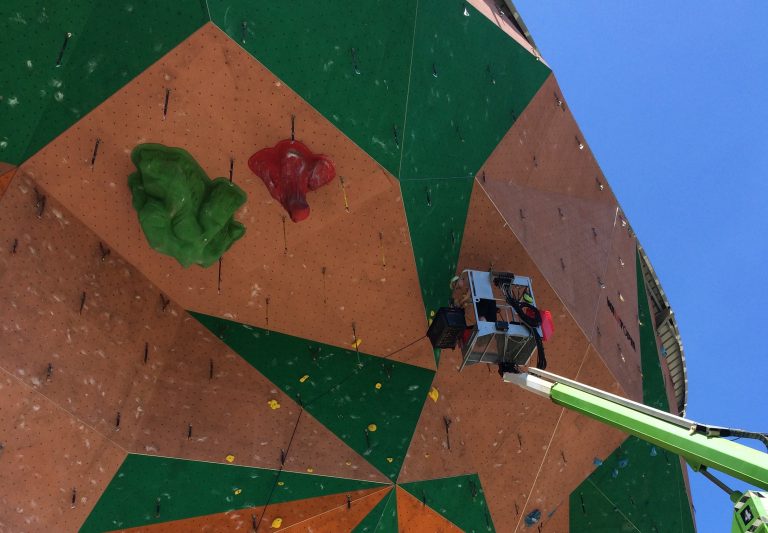
Climbing wall inspection from a boom lift on an outdoor climbing tower
What gets checked

What an annual comprehensive inspection covers

A comprehensive inspection covers every part of the AS 2316 series that applies to your wall.

  • Structure: sub-frame, fixings, panels and t-nut inserts
  • Climbing surface: holds, volumes, macros and their fixings
  • Protection: top anchors, intermediate protection points and belay set-ups
  • Safety surfacing: impact matting and fall zones, among the most common sources of non-compliance
  • Operations: signage, inspection records and operating procedures

Auto-belay devices are serviced by their own specialist providers on the manufacturer's schedule; a good inspector will coordinate with them rather than leave a gap.

Records

Keep a log, and keep it available

Every inspection, at every level, should be recorded: what was checked, by whom, what was found and what was done about it. Schools and other groups that use your wall are entitled to see your inspection records or certification, and they are the first thing asked for after an incident.

Choosing an inspector

Independent means independent

The annual inspection must be done by someone external to the operator. We also strongly recommend that your inspector is not the company that built your wall: an independent third party with no stake in the construction can give you an objective view of the build as well as the wall's current condition. Ask about qualifications, experience across different wall types, and what the written report will contain.

FAQ

Common questions about AS 2316

Is AS 2316 mandatory?

Australian Standards are voluntary documents unless legislation, a regulator, a contract or an insurer calls them up. In practice AS 2316 is the accepted benchmark for climbing wall safety in Australia: education departments reference it in their activity guidelines, insurers and councils expect compliance, and it is what an expert will measure a wall against after an incident.

Does AS 2316 apply to bouldering walls?

Yes. Since 2021 bouldering walls have their own part, AS 2316.1.2, which also covers the impact-attenuating matting and fall zones and requires additional tests on the mats every year.

How often must a climbing wall be inspected?

Routine visual checks before use, operational inspections periodically through the year, and a comprehensive inspection at least once a year by a competent person external to the operator. New or modified walls should be inspected before they open.

Who counts as a competent person?

Someone with the training, knowledge and experience to recognise hazards on that type of structure and judge whether it is safe to use. For the annual comprehensive inspection they must also be external to the operator, and we recommend they are independent of the wall builder as well.

Where do I get a copy of the standard?

AS 2316.1.1, 2316.1.2 and 2316.1.3 are published by Standards Australia and sold through its distributors. This guide is general information to help you understand your obligations; it is not a substitute for the standard itself.

What happens if my wall fails an inspection?

A good report separates what must be fixed before climbing continues from what needs fixing within a set timeframe and what is simply recommended. We can advise on the rectification and re-inspect once it is done. See our inspection service.

Get in touch

Need an AS 2316 inspection?

Our inspections are engineer-led and independent of any wall builder, and cover every part of the standard, anywhere in Australia and New Zealand.

Item added to cart.
0 items - $0.00