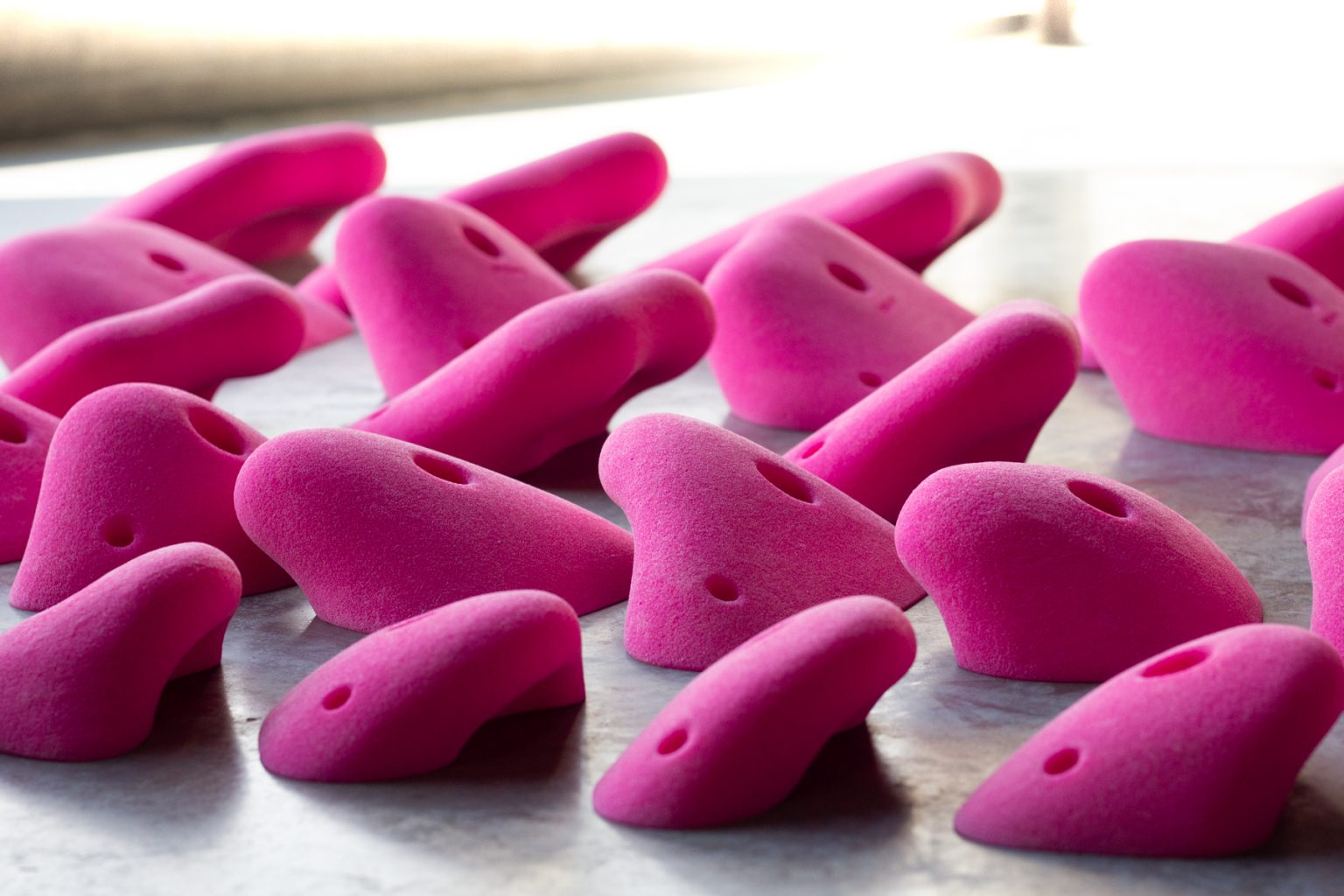
Pink climbing holds laid out on a table
Guide · Buying climbing holds in Australia

How to choose climbing holds

PU, PE, fibreglass or wood? Jugs, crimps, slopers or macros? Bolt-on or screw-on? A practical guide to choosing climbing holds for a gym, school or home wall, and to buying them in Australia.

  • 25+ brandsIn stock in Melbourne
  • 4 materialsPU, PE, fibreglass, wood
  • Every hold typeFootholds to macros
  • Setters on handAsk us what to buy
Materials

PU, PE, fibreglass or wood?

The material decides how a hold feels, how much it weighs, how it wears and what it costs. Most walls end up with a mix.

PU · Polyurethane

The modern default

Light and resistant to impact, so it survives being dropped and suits bigger shapes on busy walls. The most common material across our brands, with a wide choice of textures.

PE · Polyester

Dense and hard-wearing

Heavier than PU, with a durable, often sharper texture that lasts on high-traffic walls. Frequently the more affordable option, which makes it popular for schools and beginner areas.

Fibreglass

Big shapes, low weight

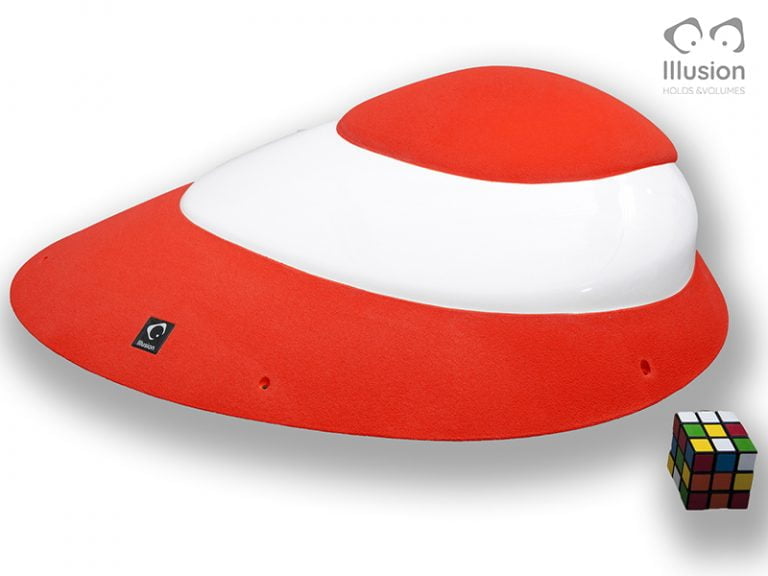
Hollow fibreglass makes macros and volumes that are big enough to change the shape of a wall yet light enough for one setter to handle. Available in dual or full texture.

Wood

Kind on skin

Smooth wooden holds and volumes suit training boards, system walls and home walls where climbers pull on the same holds for hours.

Hold types

What each type of hold does

A good set covers the whole spread. Shop by type using the "Type of holds" filter in our store.

Jugs

Big, positive holds you can wrap your hand around. Warm-ups, beginner routes and steep terrain.

Edges & crimps

Flat, incut or sloping ledges from fingertip crimps to full-hand edges. The backbone of vertical and slightly overhanging climbing.

Slopers

Rounded holds with no lip that rely on friction and body position. Great for teaching movement on vertical and slab walls.

Pinches

Held between thumb and fingers. Pinches add compression and thumb strength to a set.

Pockets

Holds you climb with one, two or three fingers inside. Use sparingly and think about finger safety.

Footholds & jibs

Small screw-on or bolt-on holds that define the feet. Cheap, and you always need more than you think.

Macros

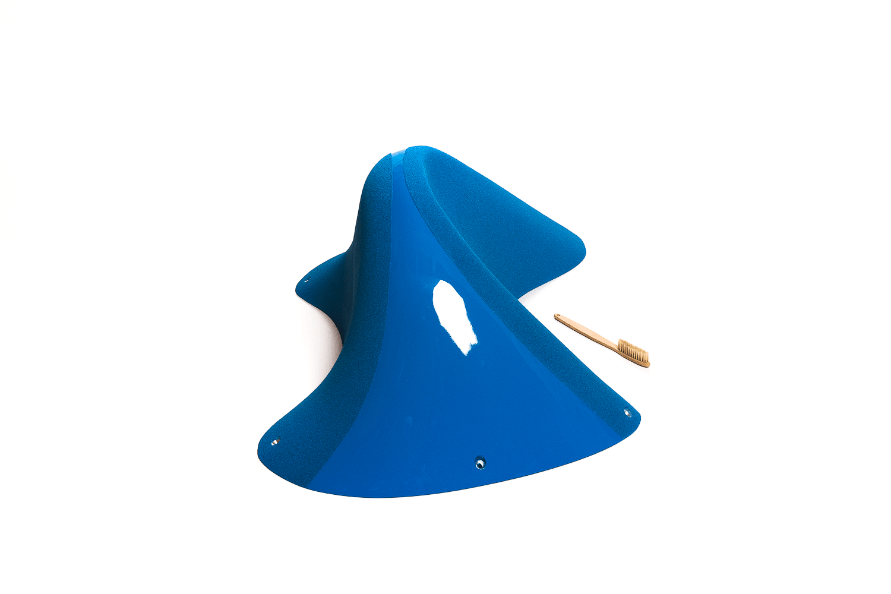
Large fibreglass holds that read as features. Dual texture macros have smooth sections so setters control exactly where climbers grip.

Volumes

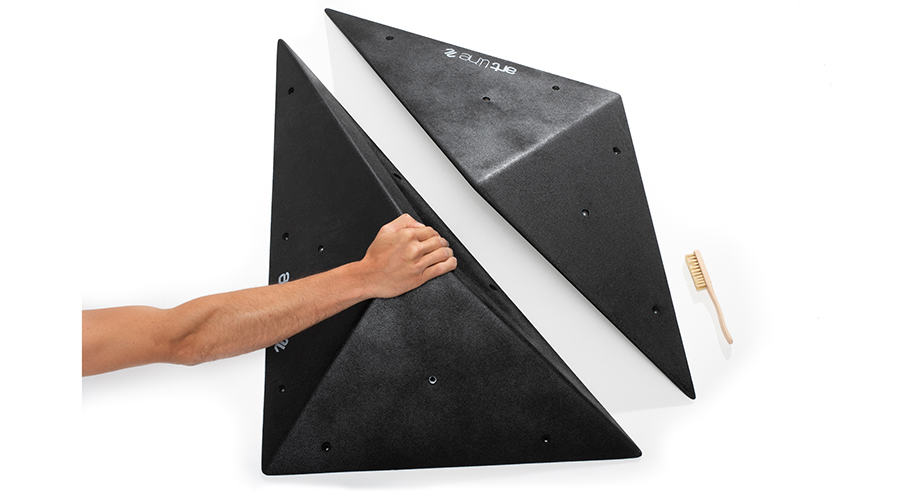
Wooden or fibreglass geometry bolted to the wall and covered in t-nuts, so holds can be set on them. They change the wall angle itself.

A dual texture fibreglass macro
Texture and fixings

Dual texture, full texture, bolt-on or screw-on

Full texture holds are grippy all over. Dual texture holds combine textured and smooth (polished) surfaces so the setter decides where a climber can and can't hold on; they are a staple of competition-style setting.

Bolt-on holds fix through the wall into a t-nut with a hold bolt. Australian walls use either imperial 3/8" or metric M10 t-nuts, so check which your wall has before you order bolts. Screw-on holds, mostly footholds and jibs, fix straight into the plywood with wood screws and can go anywhere.

How much do you need?

Building a hold package

  1. Start from the wall

    Angle and height decide the mix: slabs and vertical walls want small edges, slopers and footholds; steep walls want jugs, big pinches and macros. Training boards want a dense grid of small-to-medium holds.

  2. Cover the spread

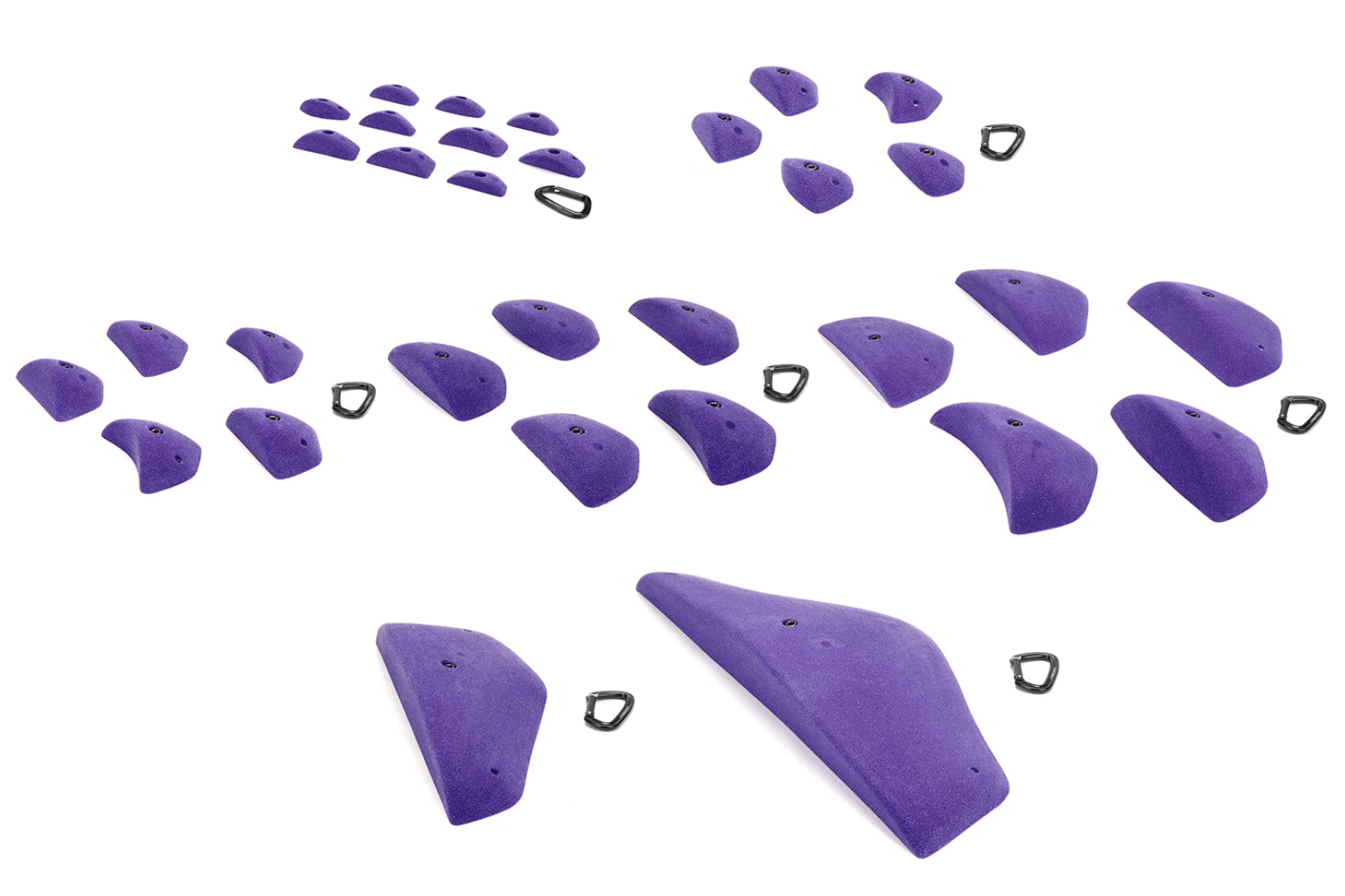
    Every wall needs holds for its beginners and for its strongest climbers. Buy across types, sizes and grades, not just the shapes you personally like, and include plenty of footholds.

  3. Think in sets and colours

    Holds are sold in sets, usually by size within a shape family. Setting by colour is the norm in Australia, so buy sets in the colours your grading system uses.

  4. Ask a setter

    Our team sets for gyms and competitions every week. Tell us your wall dimensions, angles, who climbs there and your budget, and we'll put an opening package together.

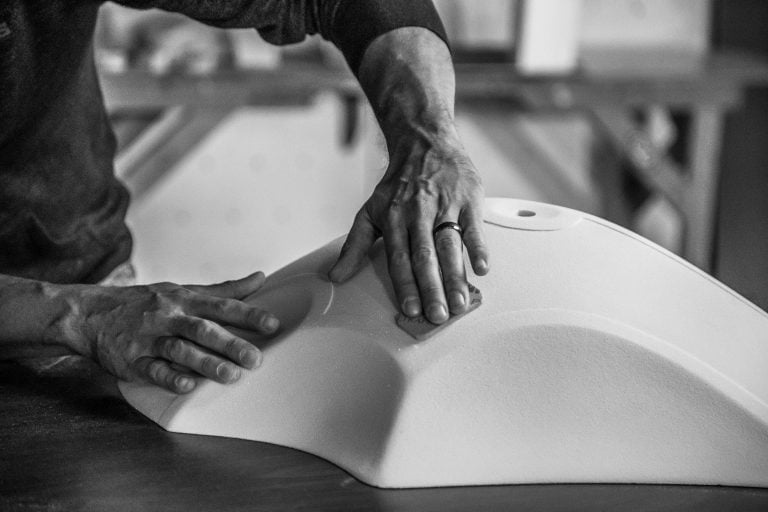
A hold shaper refining a new climbing hold shape
Brands

Which brand for which job?

Every brand we stock has a personality. A few pointers to get you started, with the full story on our partner brands page.

FAQ

Climbing hold questions

What is the difference between PU and PE climbing holds?

PU (polyurethane) holds are lighter and more resistant to impact, which suits bigger shapes and busy walls, and most modern brands shape in PU. PE (polyester) holds are denser and heavier with a hard-wearing texture, and are often the more affordable option, which is why they are popular for schools and beginner walls.

How many climbing holds do I need for a home wall?

It depends on the size and angle of the wall and how you train, so there is no single number. Aim for a spread of hold types and sizes rather than a lot of one shape, include plenty of footholds, and add sets over time. Tell us your wall dimensions and we will suggest a starting package.

Imperial or metric t-nuts: which do I have?

Australian walls use either imperial 3/8" or metric M10 t-nuts. Check an existing bolt or ask your wall builder before ordering bolts. Our wooden volumes are fitted with your choice of t-nut.

What are dual texture holds?

Dual texture holds combine grippy textured surfaces with smooth polished sections, so the setter controls exactly where a climber can hold on. They are common on fibreglass macros and in competition-style setting.

Can I buy climbing holds in Australia without a container order?

Yes. Everything in our online store is in stock in our Melbourne warehouse and ships Australia-wide, often arriving within a few days. Container orders are only needed for holds that are not in stock.

Get in touch

Not sure what to buy?

Send us your wall dimensions, angles and who climbs there, and one of our setters will put together a hold package that fits your budget.

Item added to cart.
0 items - $0.00